A timeless capsule wardrobe is not a rigid list of identical basics. It is a focused collection of pieces that suit your real life, combine easily, and still leave room for personality.
The ten steps below move from defining your style to maintaining the finished wardrobe. Each image demonstrates how a limited palette, dependable staples, and a carefully chosen accent can create a polished outfit without unnecessary excess.
Define Your Style Direction
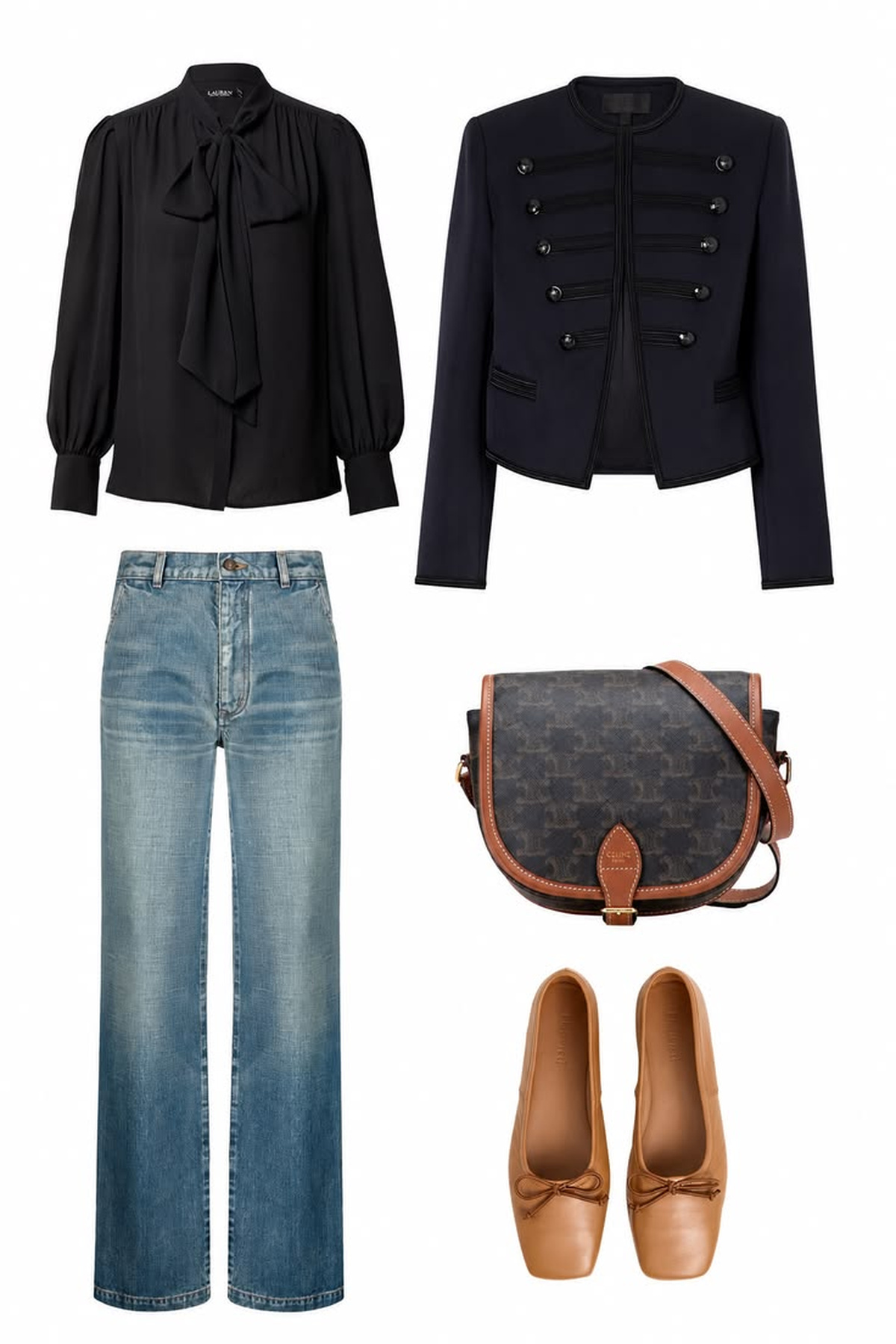
Begin with three or four words that describe how you want to dress. Timeless, polished, feminine, relaxed, and refined are useful examples because they give every future choice a purpose.
This combination balances a structured navy jacket and a soft tie-neck blouse with easy denim and ballet flats. It is a strong reference point for a wardrobe that needs to feel elegant without becoming overly formal.
Capsule note: Save a few outfits that reflect your preferred mood, then look for the colors and silhouettes they repeat.
Choose Your Core Colors
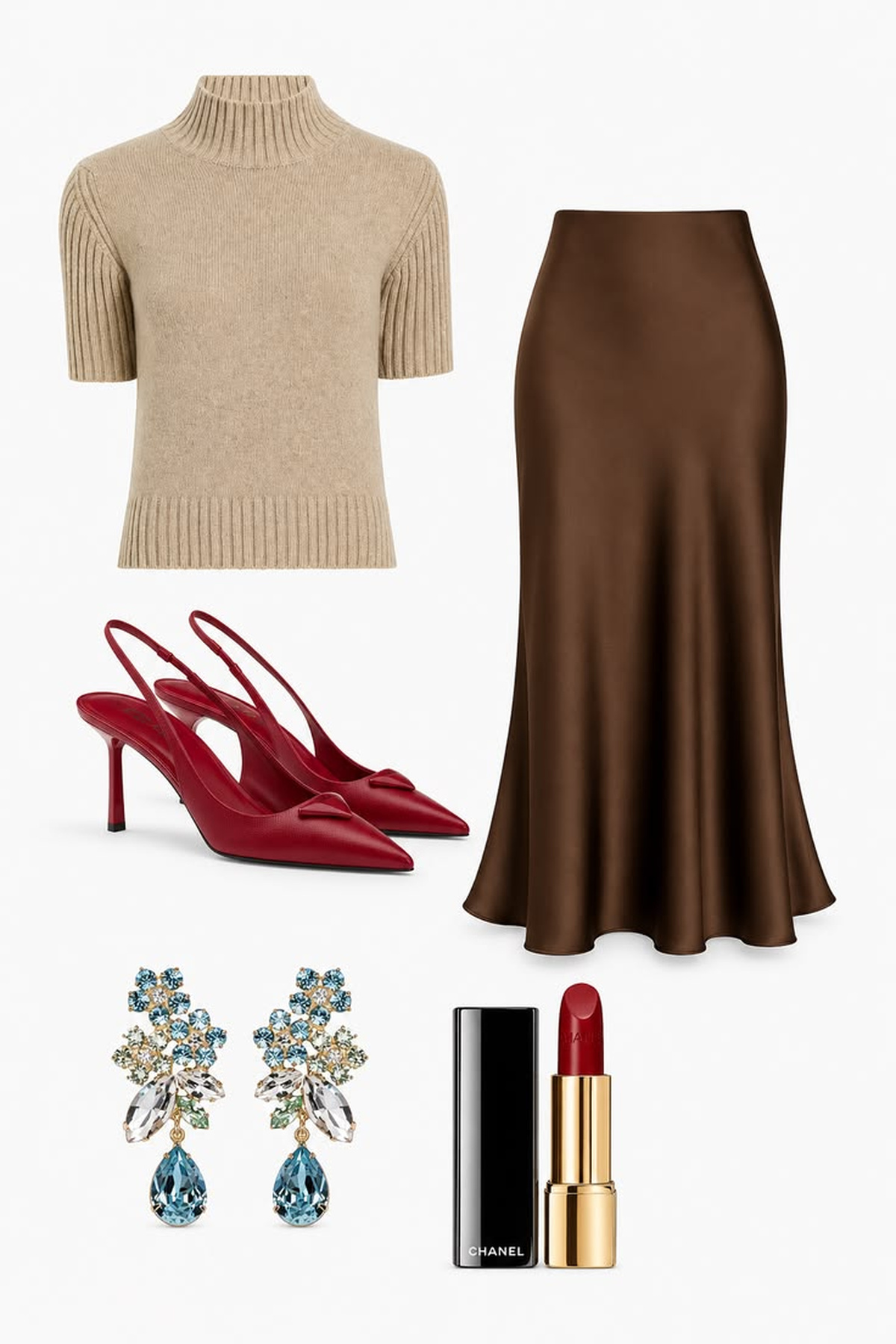
Choose two or three dependable neutrals that can appear across tops, bottoms, outerwear, and shoes. Navy, ivory, camel, chocolate, black, and denim are especially easy to combine.
A smaller accent palette keeps the wardrobe expressive without making it difficult to mix. Here, red adds energy to warm camel and brown while the main pieces remain useful on their own.
Capsule note: Let most purchases support the core palette and reserve accent colors for pieces you can repeat confidently.
Audit What You Already Own
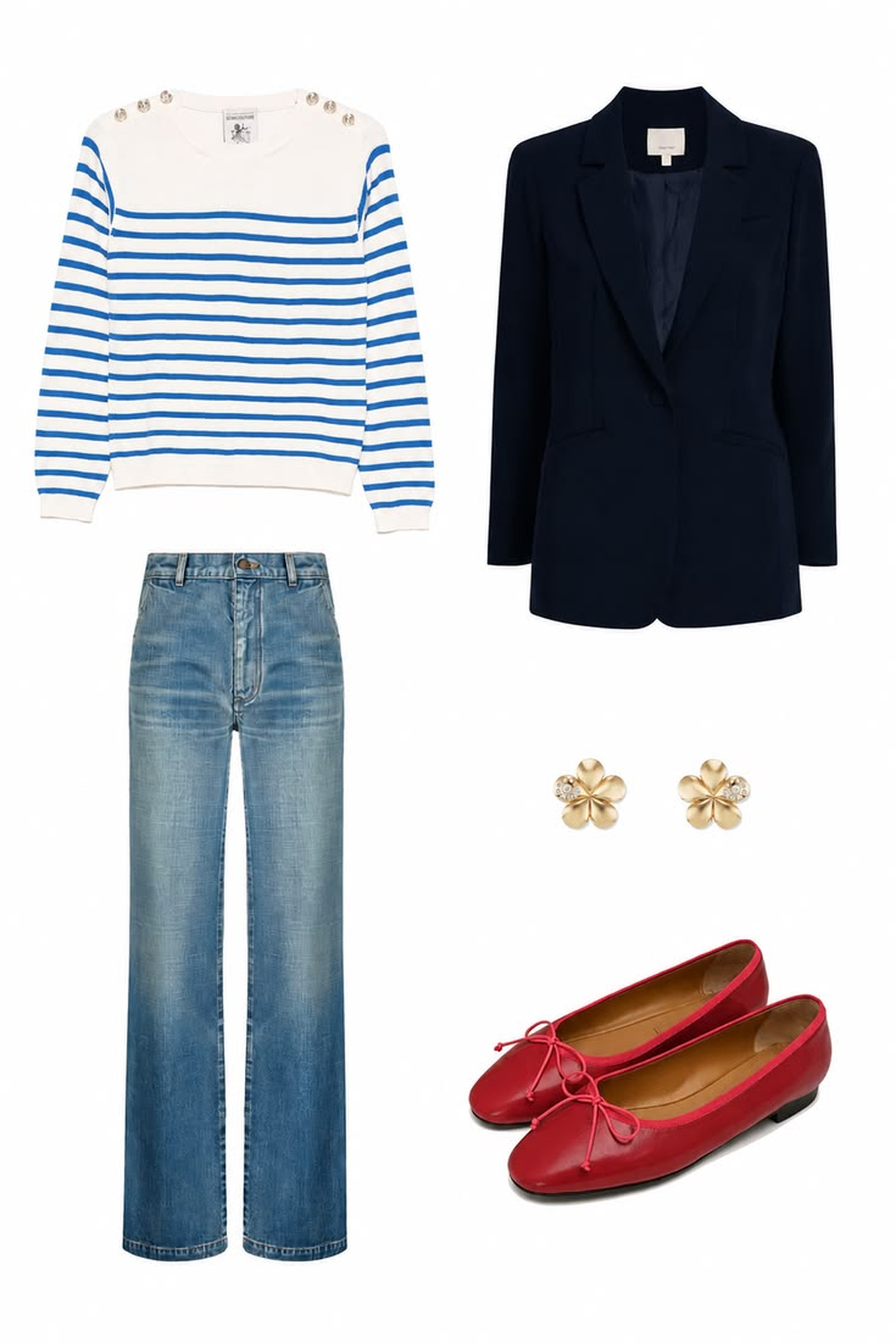
Before buying anything, separate the pieces you wear often from the ones that only create clutter. Notice which items fit well, work for your routine, and combine naturally with several others.
A Breton knit, navy blazer, jeans, and flats are familiar staples, but together they create a complete formula. An audit often shows that the most useful capsule pieces are already present.
Capsule note: Photograph several successful outfits during the audit so you can see which pieces deserve a permanent place.
Invest in Better Staples
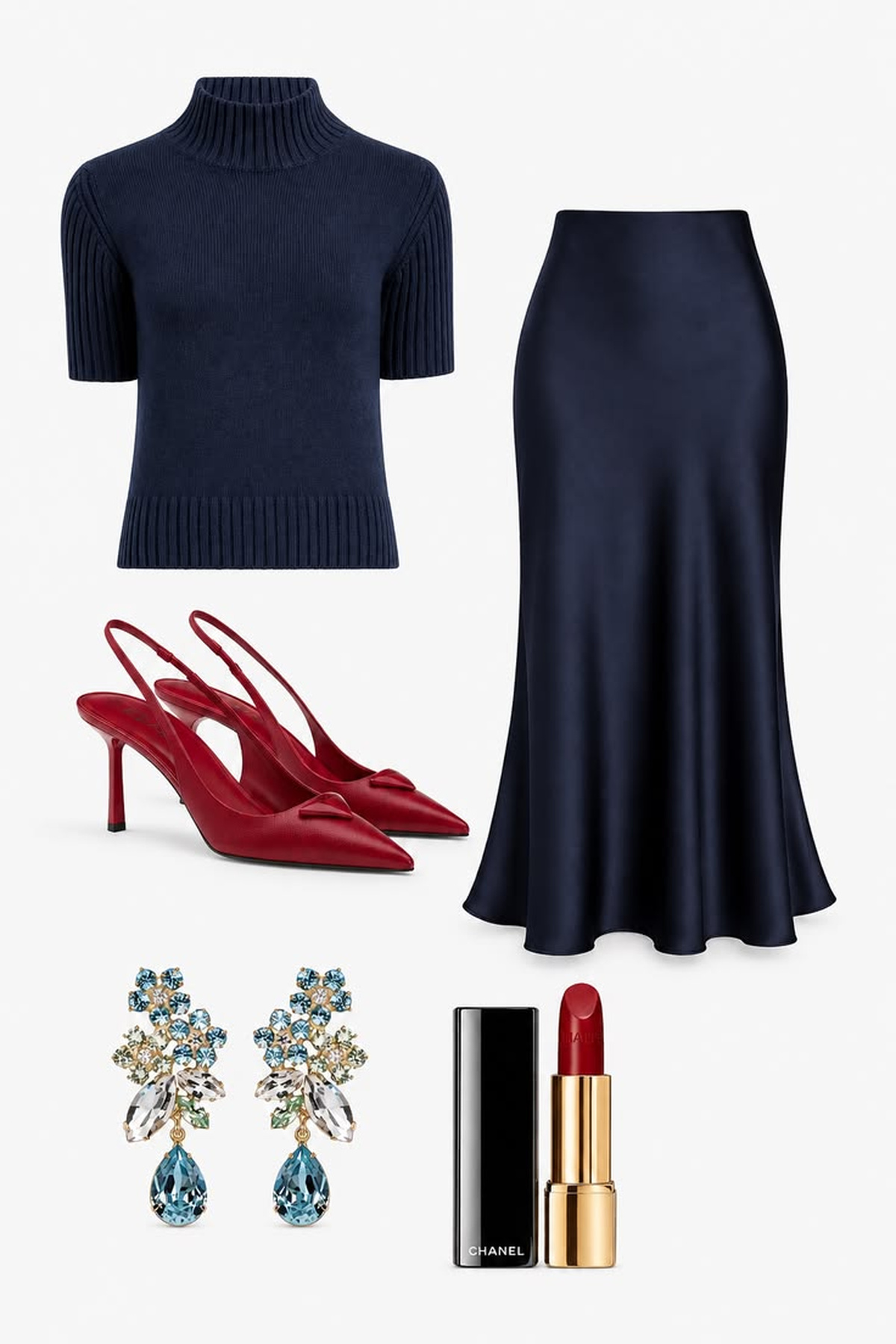
Prioritize the pieces that carry the most outfits: refined knitwear, a well-cut blazer, quality denim, a versatile skirt, comfortable shoes, and a practical bag.
The navy knit and satin skirt show how two simple staples can create a tonal evening look. Each piece can also be separated and restyled with denim, tailoring, or a crisp shirt.
Capsule note: Judge value by fabric, construction, comfort, and repeat wear rather than by the label alone.
Shop Slowly and Intentionally
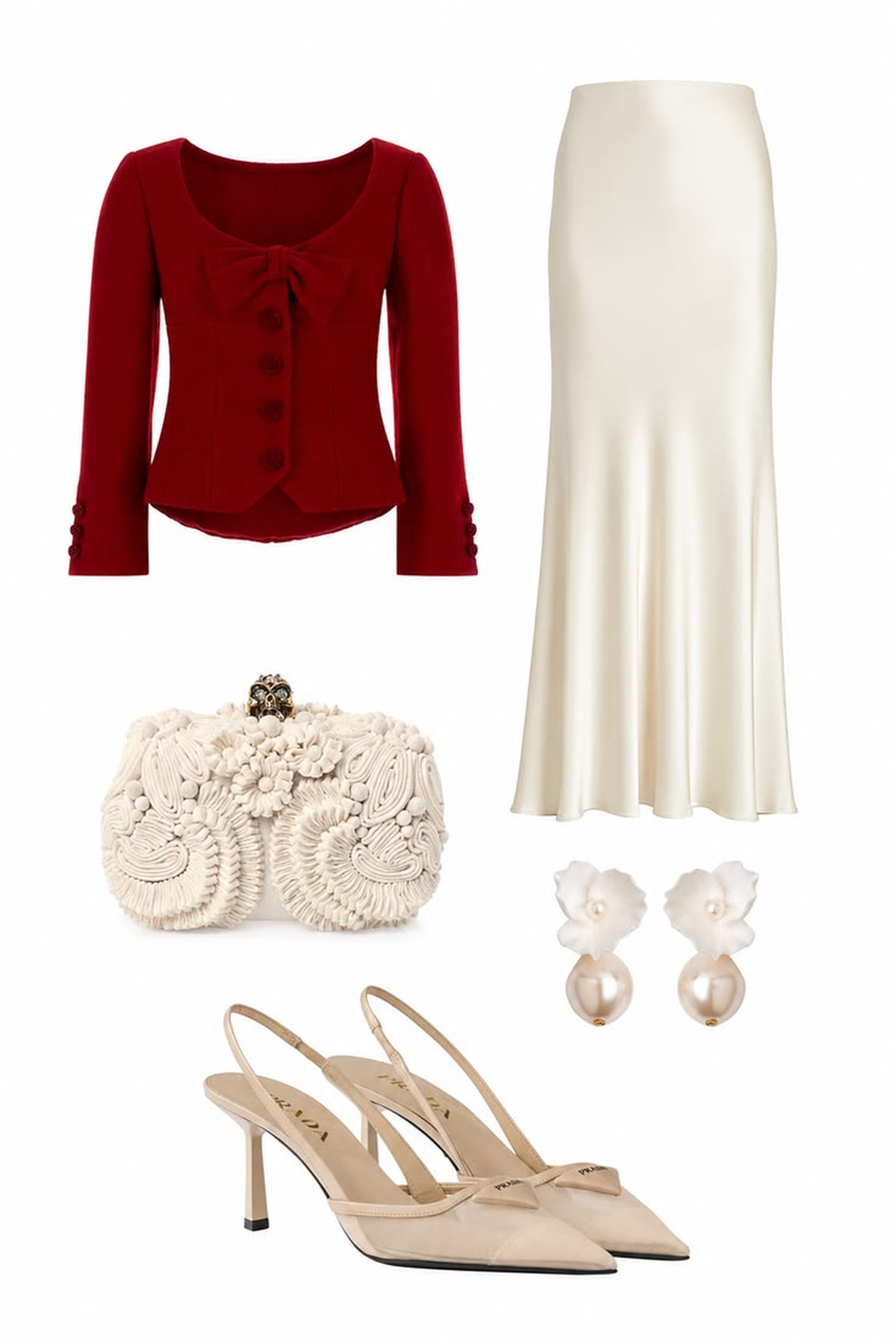
A capsule wardrobe does not need to be completed in one weekend. Build it gradually so every addition answers a real need and works with pieces you already own.
A red jacket can become a useful accent when it works with ivory, denim, black trousers, and a neutral dress. Waiting long enough to test those combinations helps prevent attractive but isolated buys.
Capsule note: Before purchasing, name at least three existing pieces that will work with the new item.
Build Reliable Outfit Formulas
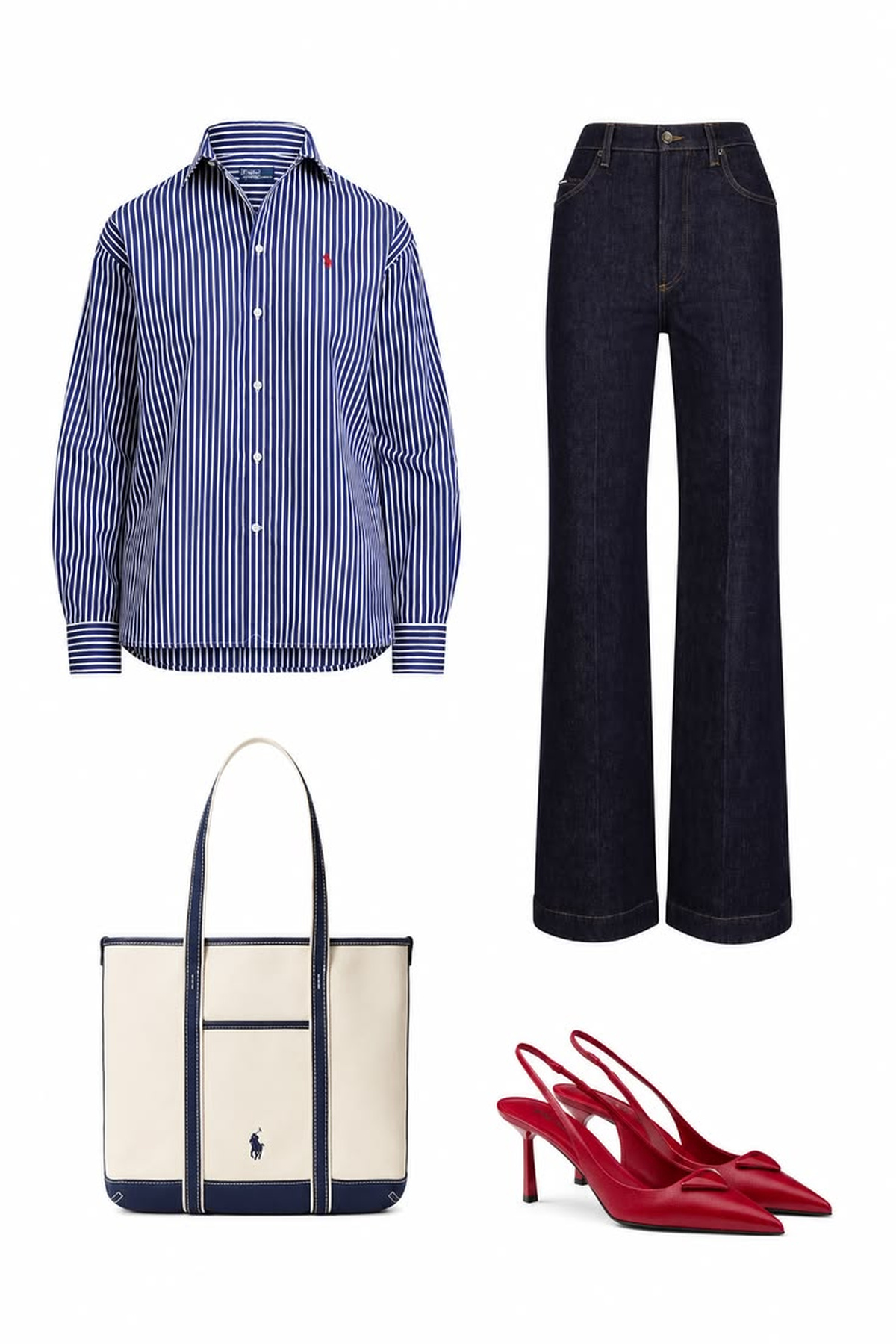
Reliable formulas remove the pressure to invent a completely new outfit every day. Start with combinations such as a shirt with dark denim, a knit with a midi skirt, or a blazer over a simple top.
This striped-shirt formula is polished enough for daytime plans yet relaxed enough for regular wear. The tote adds structure and the red shoes create one consistent focal point.
Capsule note: Keep a short list of five formulas and vary only one element at a time.
Prioritize Fit and Tailoring
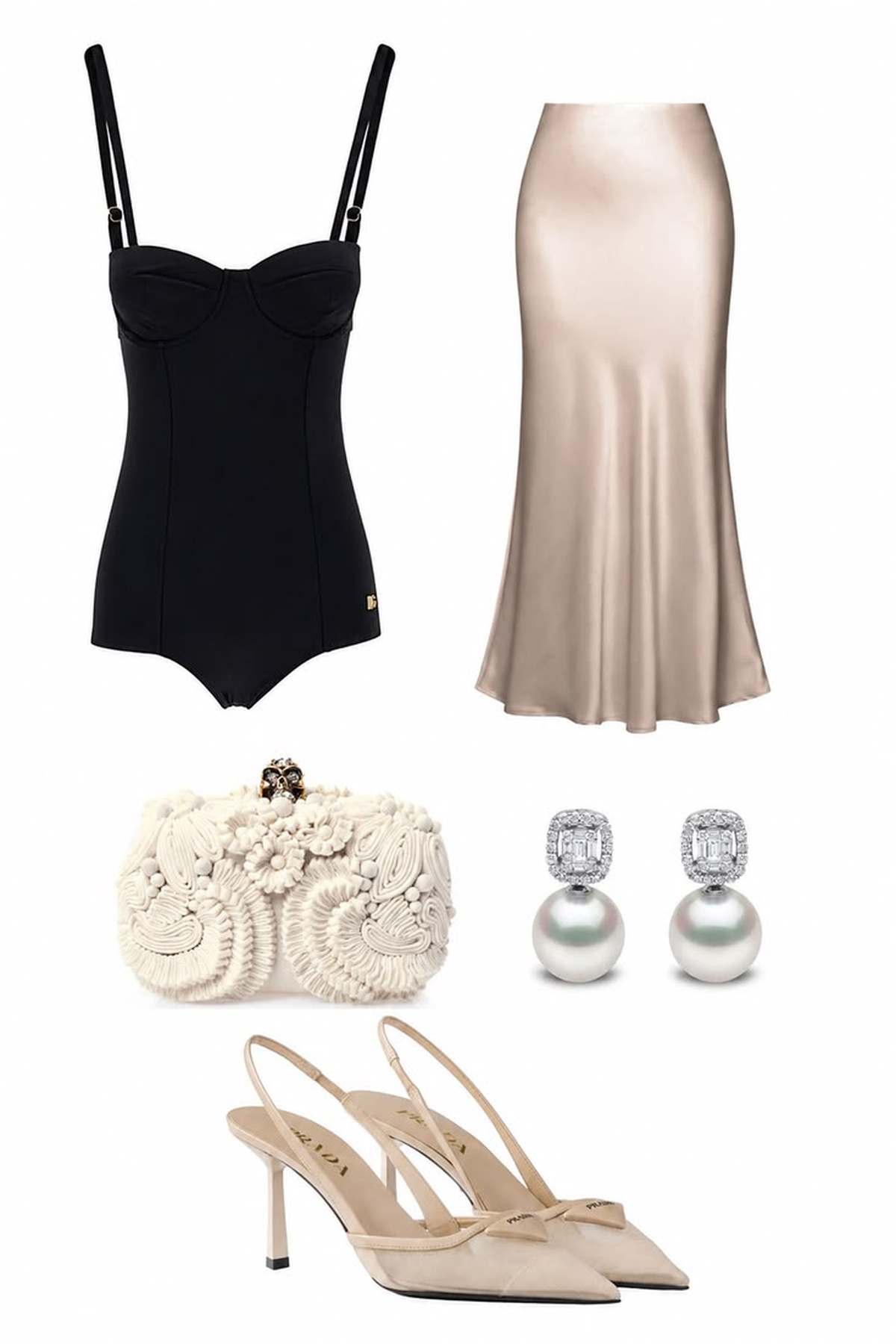
In a smaller wardrobe, fit becomes more visible. Check the shoulder line, sleeve length, waistband, rise, and hem so each piece sits comfortably and creates the silhouette you intended.
The close black top and fluid midi skirt work because their proportions are balanced. Small alterations to a good piece can often improve more outfits than another new purchase.
Capsule note: A tailor can refine hems, sleeves, and waist placement while preserving the character of a piece you already like.
Fill Genuine Wardrobe Gaps
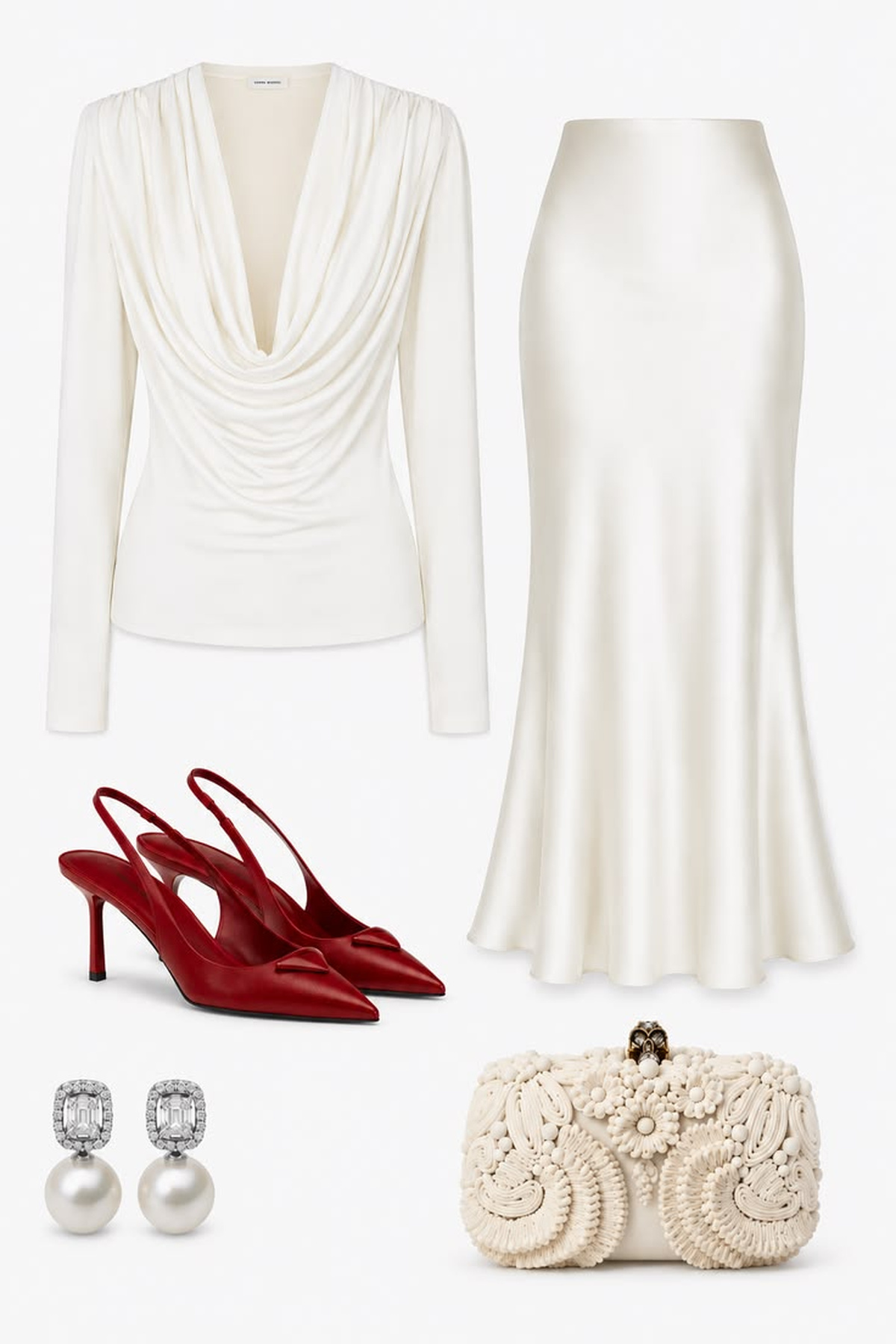
Keep a written list of missing pieces and wait before acting on it. A genuine gap appears repeatedly: perhaps you lack an occasion outfit, a practical work bag, or a layer that completes several looks.
An ivory top and matching skirt solve the need for a refined event outfit, but they also remain useful as separates. That flexibility is what distinguishes a capsule addition from a one-time purchase.
Capsule note: Choose a gap-filling piece only when it completes several outfits or solves a repeated dressing problem.
Create a Seasonal Rotation
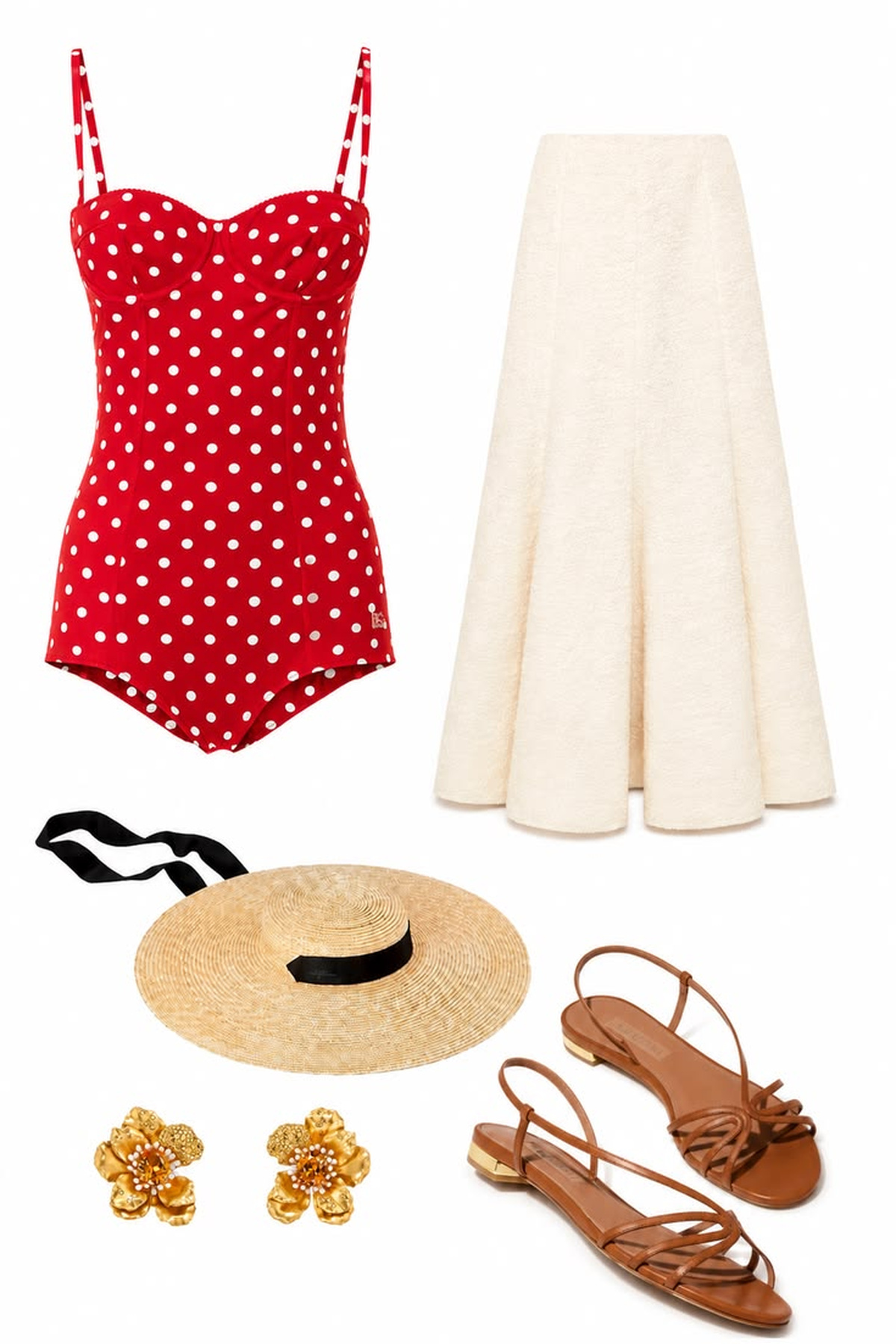
Keep the core wardrobe consistent, then rotate lighter layers, warmer knits, shoes, and accessories as the weather changes. A small seasonal edit makes the active closet easier to see and use.
The ivory skirt can remain part of the core while the polka-dot top, straw hat, and sandals bring it into warm weather. Store off-season items neatly rather than treating every change as a reason to shop again.
Capsule note: Build each seasonal edit around the same core bottoms, outerwear, and bags whenever possible.
Review and Maintain Your Capsule
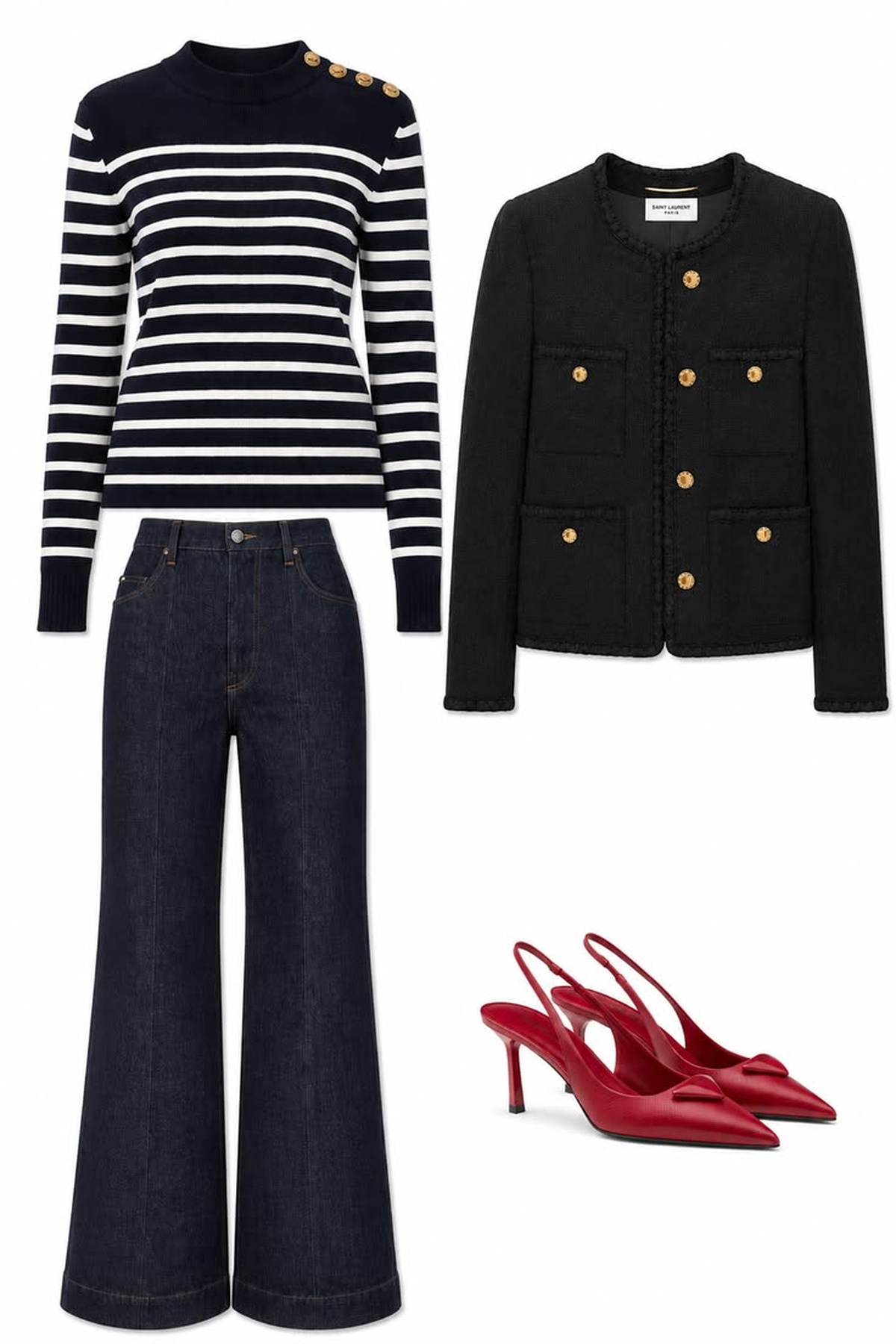
Every few months, review what you wore most, repair what needs attention, and release pieces that no longer suit your routine. The goal is not a permanently fixed list but a wardrobe that evolves slowly and coherently.
This combination revisits the capsule's recurring elements: stripes, dark denim, a structured jacket, and red shoes. Repetition is useful evidence—it shows which pieces deserve care and which future purchases should support them.
Capsule note: Track repeat wears for a season; your most-used pieces will reveal the real center of the wardrobe.
Frequently Asked Questions
How to Build a Timeless Capsule Wardrobe in 10 Steps
How many pieces should a beginner capsule wardrobe include?
There is no required number. Start with a small working edit for your current season and routine, then add only when a clear outfit gap appears. Ease of use matters more than reaching a fixed total.
What is the best first step when building a capsule wardrobe?
Review what you already wear most, define the situations you dress for, and choose a practical base palette. This prevents the capsule from becoming an abstract shopping list.
How often should a capsule wardrobe be reviewed?
A light review at the start or end of each season is usually enough. Note repeat wears, repair needs, and genuine gaps before deciding whether anything should be stored, released, or added.
A Clear Final Edit
Before You Finish the Outfit
- It suits your real routine. The piece works for the places you actually go and the way you prefer to dress.
- It combines easily. You can name at least three outfits using items already in the wardrobe.
- It feels comfortable. Good fabric and fit make repeat wear more likely.
- It supports the palette. The color works with your core neutrals or serves as a deliberate accent.
- It earns its space. You reach for it regularly and would choose it again.